

Commercial Electrical Guides for New Hampshire and Massachusetts
Fit-ups, three-phase power, lighting payback, maintenance and keeping a building open while the work happens. Written for the person signing it off.
Fit-Ups, Distribution, Lighting and Maintenance
Written for owners, facilities managers and anybody who has to keep a site running while electrical work happens.
Planning the Electrical for a Restaurant Fit-Up
Kitchen equipment loads, the inspection sequence, and the decisions that are expensive to change late.
Three-Phase Power: What It Is and When a Business Needs It
Why some equipment will not run on single phase, and what bringing three phase into a building involves.
LED Retrofit: Working Out the Payback
Fixture count, running hours and rate, and how to tell a real payback figure from a sales one.
Keeping a Business Open During Electrical Work
What genuinely cannot be done live, how work gets phased, and why the schedule is the real cost.
What a Standby Generator Protects in a Business
Working out what an hour of downtime costs, and sizing backup against that rather than against the building.
Electrical in Multi-Tenant and Mixed-Use Buildings
House panels, sub-metering, who pays for what, and the questions to settle before a tenant moves in.
Preventive Maintenance: What It Actually Prevents
Thermal scanning, torque checks and what a loose connection looks like before it becomes an outage.
Workplace and Fleet EV Charging: What It Takes
Service capacity, load management across several ports, and what changes when it is a fleet rather than staff.
Fitting Out an Older Commercial Building
Mill buildings and historic downtown stock: what you find behind the walls and what it does to a schedule.
How to Find the Right Guide for the Decision You Are Making
Written for the Person Signing It Off
These guides are for owners, facilities managers, general contractors and anybody who has to keep a building running while electrical work happens in it.
The difference from the homeowner side is the question being asked. For a homeowner the question is what the work costs. For a business it is what the work interrupts, how long the lead times are, and who carries the license. The guides below are grouped that way.
They cover work across southern New Hampshire and northern Massachusetts: Manchester, Nashua, Concord, the Seacoast, and over the border into Lowell, Lawrence, Haverhill and Methuen. Where a rule differs between the two states, the guide says which is which.
Taking on a Space or Fitting One Out
The fit-up is where most commercial electrical projects start, and where most of them go wrong if the sequence is not understood early.
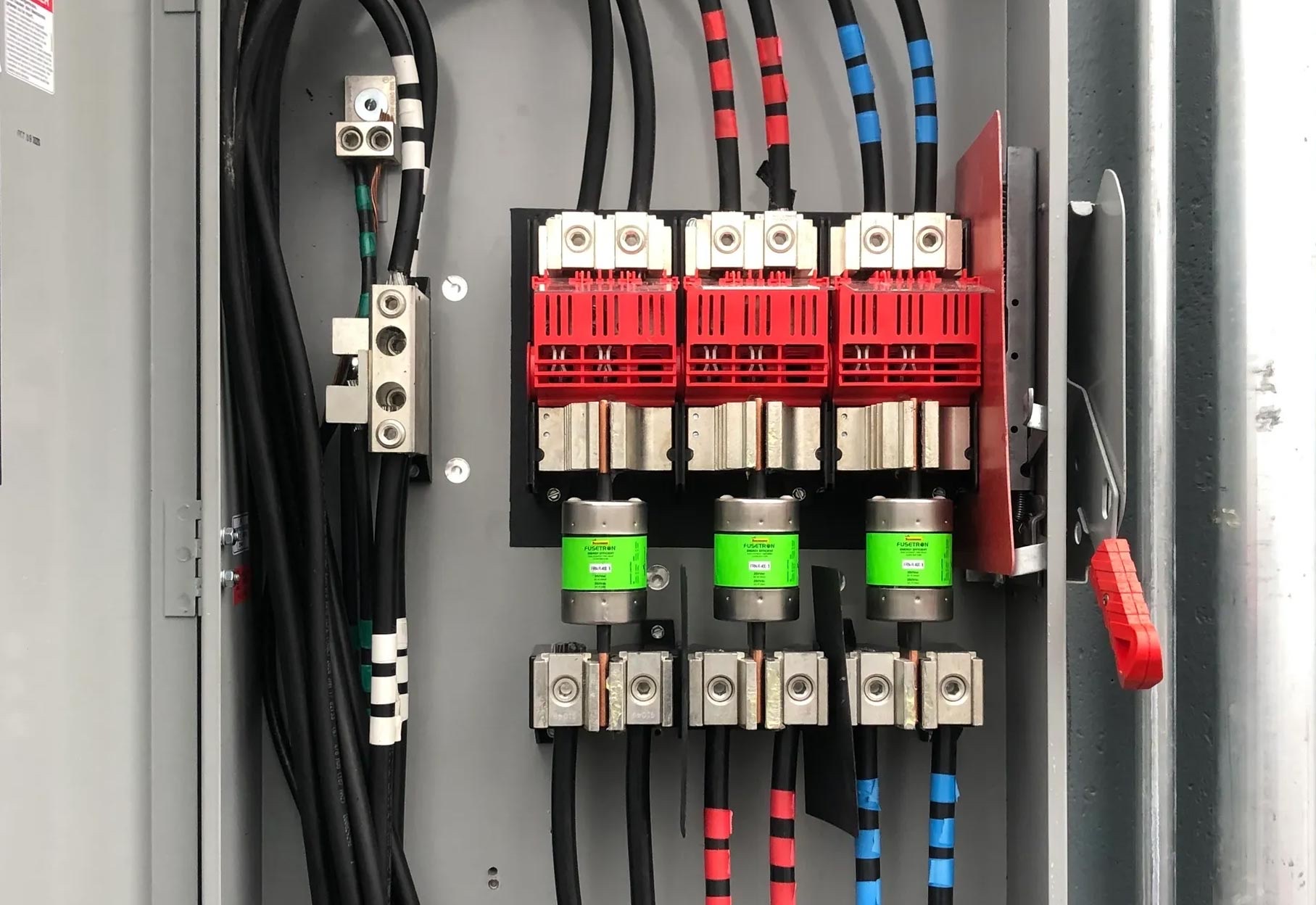
Planning the electrical for a restaurant fit-up is the heaviest version of it: kitchen loads, three phase, the equipment schedule, hood interlocks, and the health and fire sign-offs that sit alongside the electrical inspection. Fitting out an older commercial building covers the mill stock and downtown brick that makes up so much of the space here, and why the survey carries more weight than the drawings.
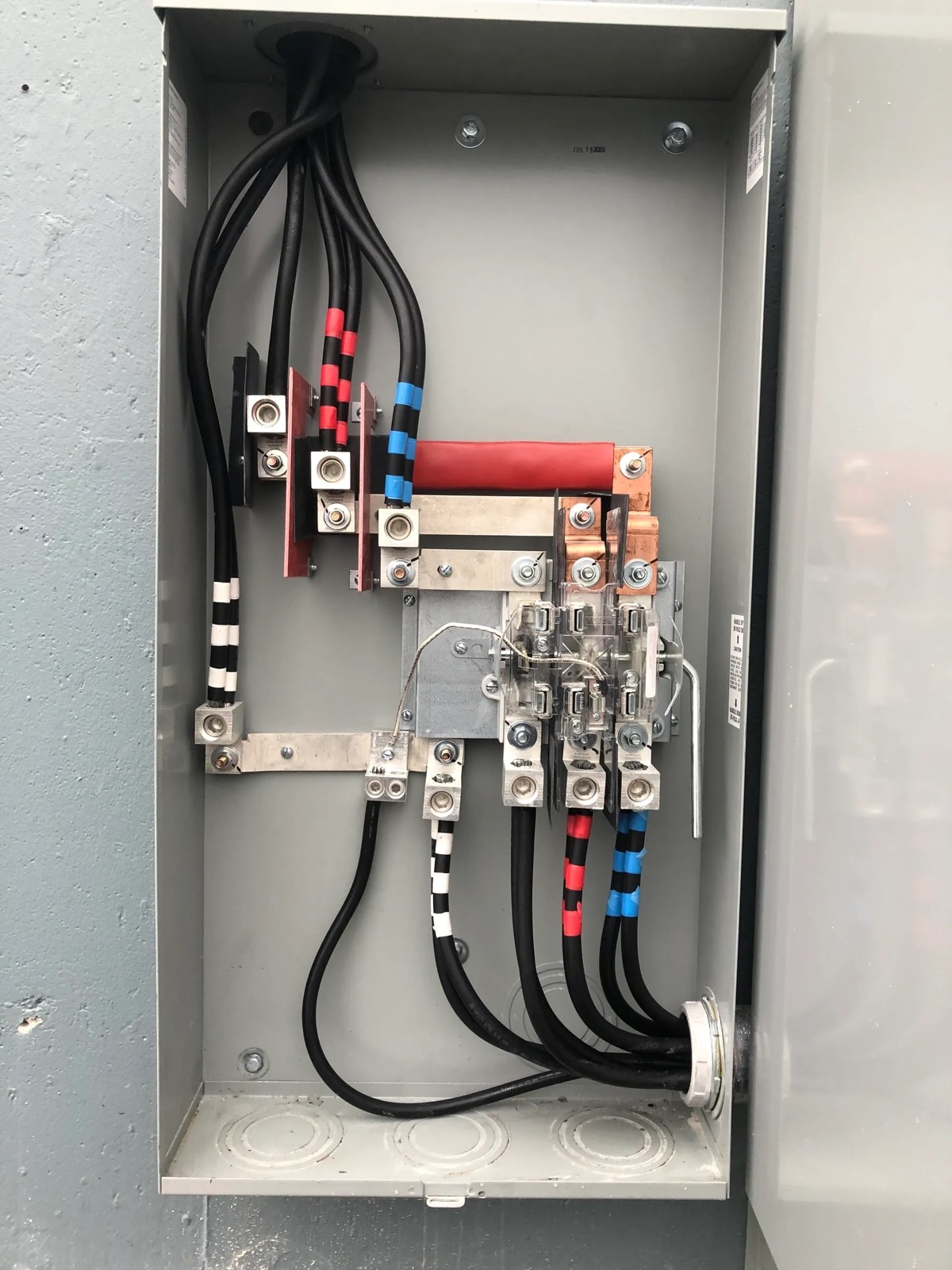
Three-phase power is the one to read before signing a lease rather than after. Most commercial equipment of any size expects it, a lot of it is not made any other way, and bringing it to a building that does not have it is a utility project measured in months.
The work behind these is tenant fit-ups and build-outs and service, distribution and switchgear.
Cutting What the Building Costs to Run
Lighting is the clearest return available in most commercial buildings, and it is worth doing the arithmetic properly rather than on a rule of thumb.
Working out an LED retrofit payback covers what belongs in the calculation and what does not: the ballast draw people forget on older fluorescent, the maintenance cost of a fixture that needs a lift to reach, and the running hours that actually decide it. Building size matters far less than hours.
It also covers why the national payback figures manufacturers quote understate the case here, which is that commercial electricity rates in New England are among the higher ones in the country.
The LED payback calculator runs the numbers against a real fixture count and a real quote, and commercial lighting covers what the work involves.
Staying Open, and Staying Open Unplanned
For most commercial customers the cost of being shut is larger than the cost of the electrical work, which changes how a job is planned rather than how it is done.
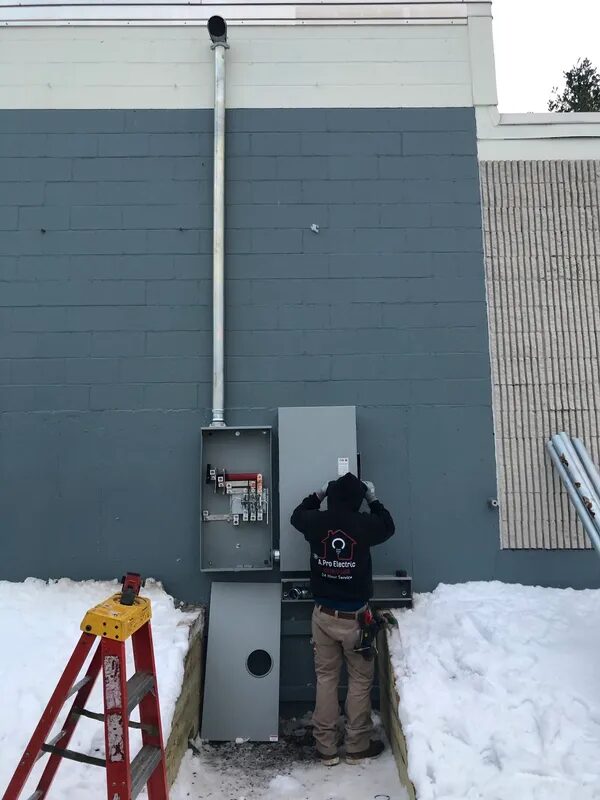
Keeping a business open during electrical work sets out which minutes of a job genuinely need the power off, and how those get moved into a window that costs the business nothing. Most work does not need an outage at all, and knowing which parts do is what makes the schedule honest.
What preventive maintenance actually prevents covers the other kind of downtime, the unplanned kind. A loose or corroded connection runs hot under load for months before it fails, a thermal survey sees it, and that is the failure mode behind most unplanned outages and most electrical fires.
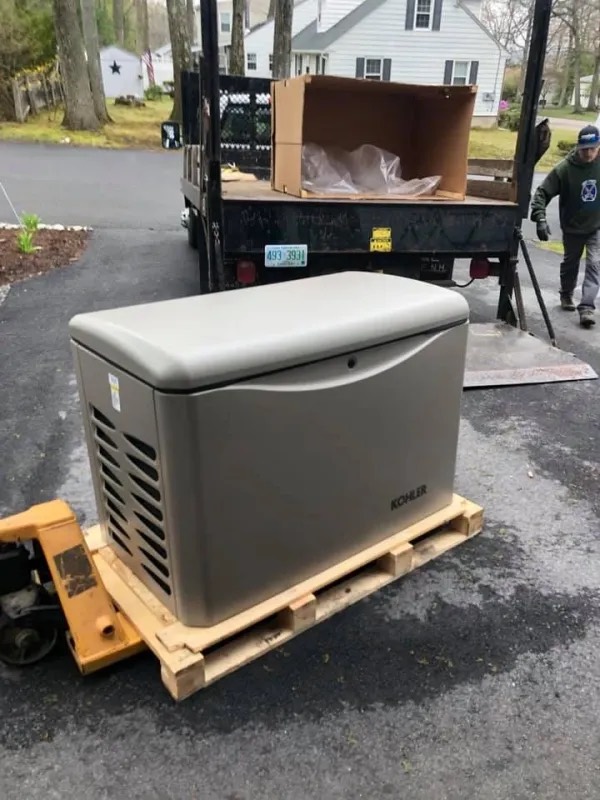
What a standby generator protects in a business covers the outage you cannot prevent: sizing from connected load rather than floor area, and why the transfer switch is the installation. The work is scheduled maintenance, commercial standby power and 24 hour emergency response.
Managing Buildings Rather Than Occupying Them
Landlords, property managers and multi-site owners have a different set of problems from a single tenant, and most of them come down to who owns what.
Electrical in multi-tenant and mixed-use buildings covers house panels, separate metering, turnovers and the untangling that older subdivided buildings need. In a building that has been split more than once it is normal to find one tenant fed from another tenant's panel, which means somebody is paying for somebody else's consumption and neither can safely isolate their own unit.
Workplace and fleet EV charging is increasingly a landlord and employer question rather than a driver one. It covers sizing an array rather than a charger, using load management instead of a service upgrade, and designing the first phase so the second one is cheap.
The work is property management and multi-family and commercial and fleet EV charging.
What These Guides Deliberately Do Not Do
They do not quote prices. Commercial jobs vary too much on building, access, sequencing and lead time for a number written months ago to be worth anything, and a range that turns out to be wrong is worse than no range.
What they do instead is tell you what a price depends on, which is the thing that lets you compare two quotes and understand why they differ. On most commercial jobs the honest variables are the utility timeline, the gear lead time, the access, and how much of the work has to happen outside normal hours.
They also do not pretend the electrical is the whole project. On a fit-up or a build the electrical is rarely the critical path, but it appears on it at four specific points, and knowing which four is more useful than a longer document.
If your situation is not covered, call and ask. It is a quicker answer than reading, and it tells us what to write next.
Looking for the other side? Electrical guides for homeowners.
Common Questions About These Commercial Electrical Guides
Who Are These Commercial Guides Written For?
Owners, facilities managers, general contractors and anybody who has to keep a building running while electrical work happens in it. They assume you care more about lead times, sequencing and downtime than about the trade detail.
Why Are There No Prices in the Commercial Guides?
Because commercial jobs vary too much on building, access, sequencing and lead time for a number written months ago to be worth anything. What the guides do instead is set out what a price depends on, which is what lets you compare two quotes properly.
Do These Apply in Massachusetts as Well as New Hampshire?
Yes, and where a rule or a process differs between the two states the guide says which is which. That gap matters more than people expect, because an electrical license does not cross the state line and the inspection process is not identical.
Which Guide Is Most Useful Before Signing a Lease?
Three-phase power, then fitting out an older commercial building. Whether the building has three phase, and what is actually behind the walls, are the two things most likely to change what a space costs to occupy, and both are much cheaper to find out before you sign.
Is There Anything Here for a General Contractor?
The fit-up and older-building guides are the most relevant, because they set out the electrical dependencies that move a program: the utility date, the gear lead time, the rough-in window and the inspection sequence.
How Often Are These Updated?
When something changes that would alter the advice, or when a question comes up often enough to be worth covering. Each guide carries the date it was last updated at the top of the page rather than a generic last-reviewed stamp.