

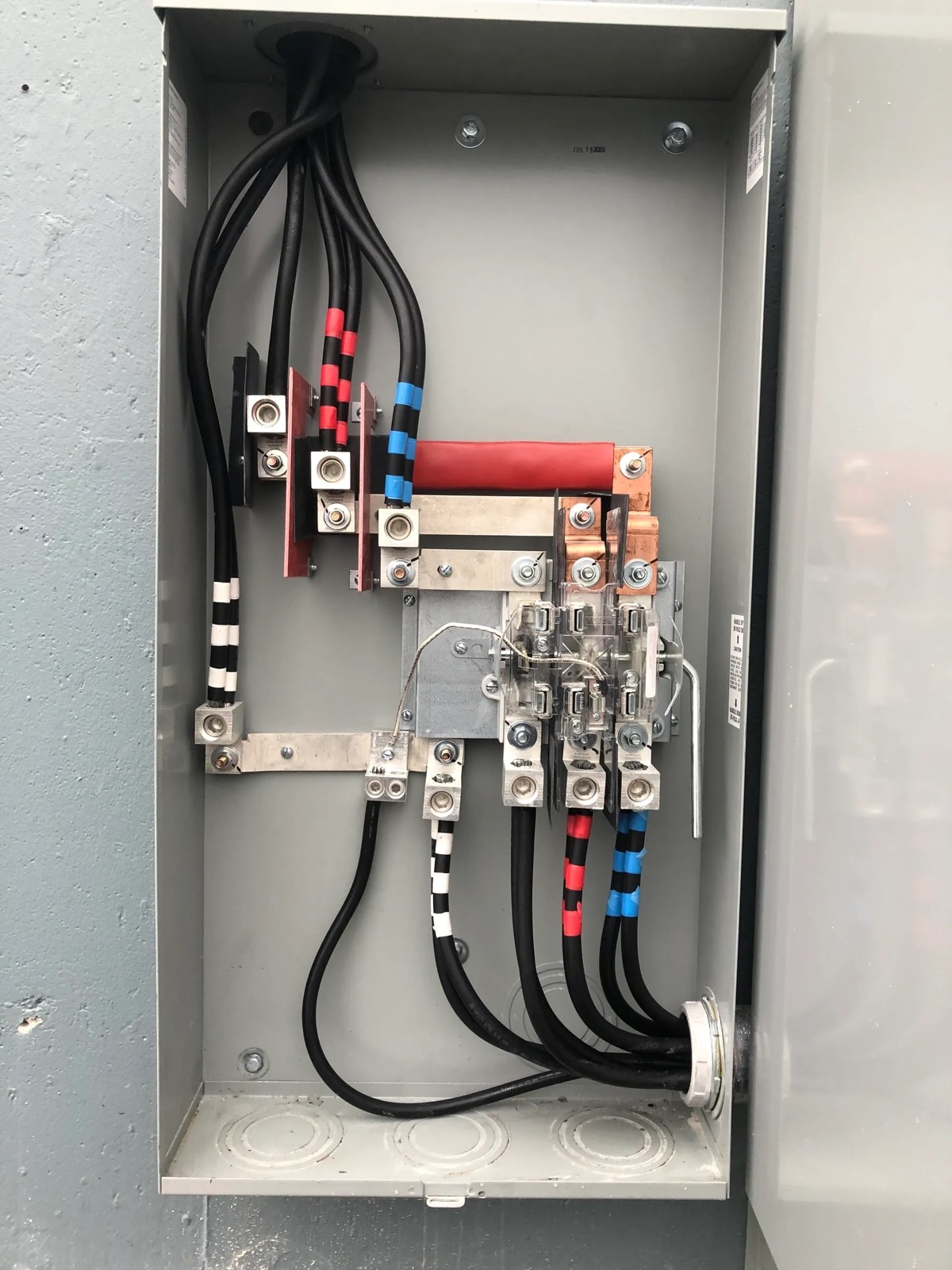
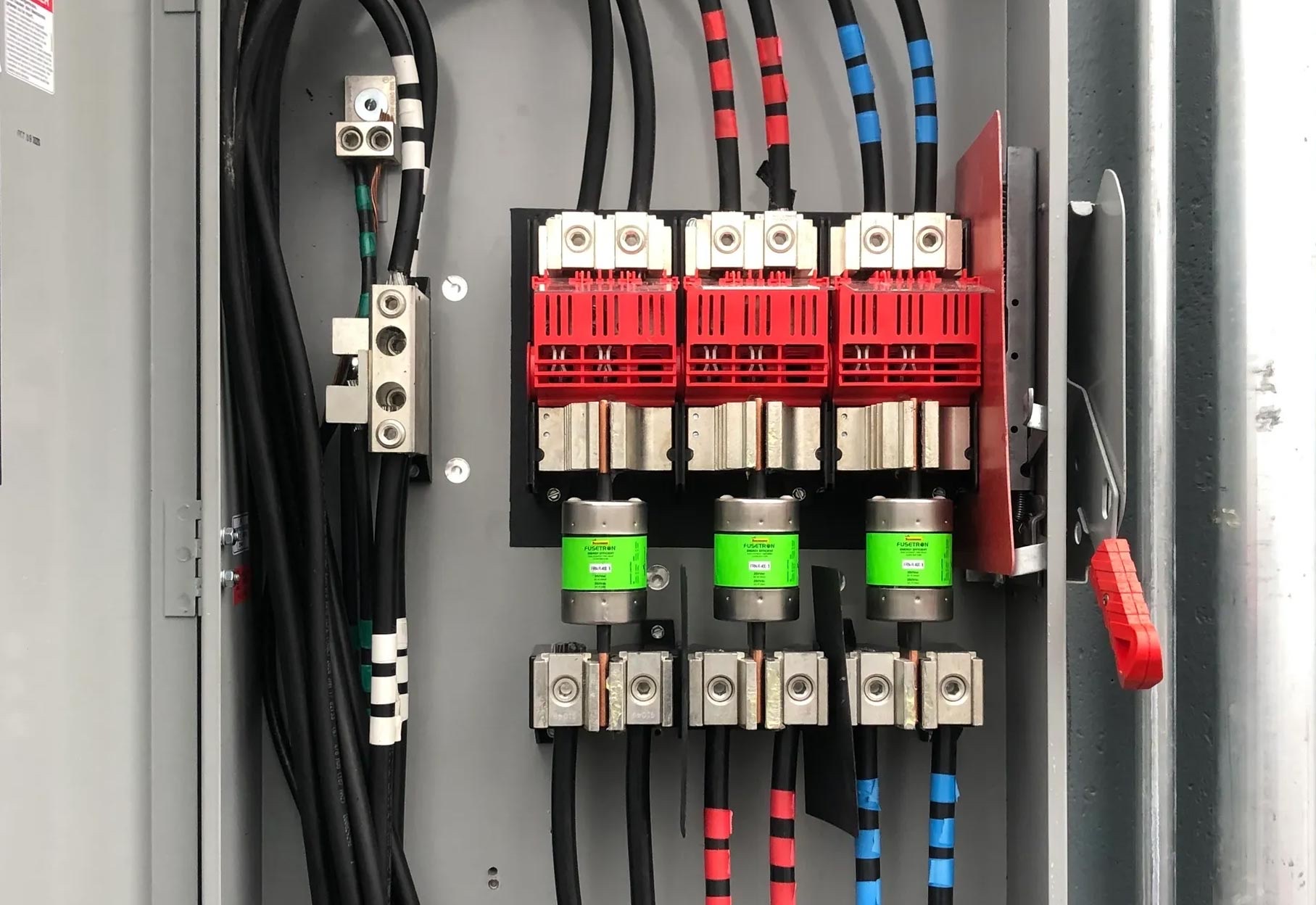
Licensed Master Electrician
Master Electrician for Homes and Commercial Sites in New Hampshire
Based in Henniker and working across southern and central New Hampshire, licensed in Massachusetts for commercial work over the border. Panel upgrades, rewiring, lighting, EV chargers, generators, commercial fit-ups and 24 hour emergency repairs.
Master
NH licensed master electrician
Insured
Certificate on request
24/7
Emergency service
Since 2018
Based in Henniker
Residential and Commercial Electrical Work
A master electrician on every permit, in houses and in commercial buildings. Pick the side that fits and the detail is a click away.
For Your Home
All Residential ServicesElectrical Panels & Service
Panel replacements, service upgrades, meter and mast work.
Wiring & Rewiring
Whole-house rewiring, knob and tube removal, added circuits.
Lighting
Recessed lighting, fixtures, exterior and landscape lighting.
EV Charger Installation
Level 2 chargers, 240 volt outlets, service capacity for an EV.
Generators & Backup Power
Transfer switches, standby generator wiring, portable inlets.
24 Hour Emergency
Power loss, scorched panels, storm damage, repeat tripping.
For Your Commercial Site
All Commercial ServicesTenant Fit-Ups & Build-Outs
Restaurants, retail, offices and warehouses, rough-in to trim.
Service, Distribution & Switchgear
Three-phase service, panelboards, transformers and feeders.
Commercial Lighting
LED retrofits, parking lot and site lighting, controls, high-bay.
Maintenance & Service Contracts
Scheduled maintenance, thermal scanning, planned replacement.
24 Hour Commercial Emergency
Downtime response, storm and outage work, temporary power.
Commercial Generators & Emergency Power
Standby systems, automatic transfer switches, life safety power.
Customer Reviews
What a Master Electrician License Actually Means
It is the top of three tiers in New Hampshire, and it is the only one a job can be permitted under.
The Three License Tiers, and Which One Can Pull a Permit
New Hampshire licenses electricians at three levels. An apprentice works under supervision. A journeyman works unsupervised but cannot hold the license a job is permitted under. A master can, and is the person the state holds responsible for the work when something goes wrong.
On every permit there is one licensed name. Here it is Austin Provencher, New Hampshire master electrician, license number 14569M. That number is checkable against the state license lookup, and it is worth checking with any contractor rather than taking the word on a van.
It also decides what happens years later. Permitted, inspected work under a named master license can be verified long after the fact; work done without either is the sort of thing that surfaces during a house sale or an insurance claim.
What the License Means for a Commercial Customer
More than it does for a homeowner. The permit, the inspection sign-off and the insurance certificate all reference the same licensed name, and it is one of the first things a facilities manager or a general contractor asks for before anybody sets foot on site.
There is a second license behind the work as well. Electrical licenses do not cross state lines, so working over the Massachusetts border needs a Massachusetts license in its own right. For a business with sites either side, that is the difference between one contractor and two.
That combination is most of why the commercial side of the business reaches further than the residential one: a job of real size justifies a drive that a service call does not, and both states are covered under the same master.
What We Work On, in Homes and in Commercial Buildings
Twenty-one areas of work across two sides of the business, and each one has a page that says what it actually involves.
Electrical Work in New Hampshire Homes
Most residential calls are one of three things. Something has stopped working and needs finding. Something is being added that the house cannot currently carry. Or something is being rebuilt and the wiring has to keep up.
The heavy end of that is panel replacement and service upgrades, usually triggered by a heat pump, an EV charger, a hot tub or a kitchen rather than by the panel failing, and rewiring, because a lot of the housing stock here still carries knob and tube, cloth-covered cable or aluminum branch wiring.
The rest is lighting, remodels and additions, generators and backup power, appliance and specialty circuits for hot tubs and well pumps, safety inspections and emergency repairs.
The residential side covers all nine, and if you are trying to work out whether your service can carry what you want to add, the load calculator answers that in a couple of minutes.
Commercial and Industrial Electrical Work
For a business the question is rarely what the work costs. It is what the work interrupts, how long the lead times are, and who carries the license, and the work is organized around that.
Tenant fit-ups and build-outs are the most common commercial job, with restaurants and food service the heaviest version and the one most contractors are least comfortable with. Behind them sits service, distribution and switchgear, which is what decides whether anything else is possible.
Inside the building, commercial lighting and LED retrofits are usually the clearest return available, and commercial wiring and circuits and machine and equipment connections are what get power to the floor. Rotation is checked on every three-phase motor, because a pump running backward can be damaged in minutes.
Keeping the building running is its own set: standby power for the outage you cannot prevent, scheduled maintenance for the failure you can, and 24 hour emergency response for the rest. Most emergency call-outs are the visible end of something that was findable months earlier.
Then the work buildings are adding rather than replacing: low voltage and structured cabling, fleet and workplace EV charging, property management across a portfolio, and new construction and GC work.
The commercial side covers all twelve, and the industry pages are the same work cut the way a buyer thinks about it: restaurants, managed property, retail, offices, clinical space and light industrial.
Where the Work Happens Across New Hampshire and Massachusetts
Henniker is home, so Hillsborough, Weare, Deering, Antrim, Bradford and Warner are the next towns over and nothing is too small in any of them.
The everyday residential run covers Concord and Hopkinton, Manchester and the towns around it, Bedford, Nashua, Derry and Salem, then Laconia and Meredith in the Lakes Region and Keene out toward Monadnock.
Commercial reaches further, because a job of real size justifies the drive: the Manchester millyard, the Everett Turnpike corridor through Nashua and Merrimack, Pease International Tradeport and the Seacoast at Portsmouth and Dover, and over the state line into Lowell, Lawrence, Haverhill and Methuen.
The service area page sets the whole thing out market by market, including the towns named under each city.
How a Job Runs, From the First Call to the Inspection
No surprises is mostly a matter of saying what happens before it happens.
What Happens Before Anybody Quotes
Somebody looks at the job. For anything beyond a straightforward repair that means being on site, because the things that move a price are rarely visible in a description: how far the cable has to travel, whether the walls are open, whether the panel has room, and what is actually behind them.
On larger work that starts with a load calculation rather than a guess, which is the defined method for working out what a building can carry. Sometimes it shows the service is adequate and the problem is downstream, which is a much smaller job than the one being asked about.
Where there is a figure we can stand behind, it is on the page. A 200 amp residential service upgrade typically runs $3,000 to $3,500, and a 2,000 square foot rewire $18,000 to $20,000. Where there is not a reliable figure, we say what the price depends on instead of inventing a range.
Permits, Inspections and Who Schedules Them
We do. Panel and service work, new circuits, rewiring, additions and commercial work are all permitted and inspected by the town the property sits in, and the permit carries the master electrician's license. The inspection gets scheduled as part of the job rather than left to you.
Where the utility is involved, a service upgrade or a new supply, the disconnect and reconnect are booked with them rather than assumed. That is usually what sets the real date, and it is worth starting early rather than after equipment is ordered.
It also means the work gets checked by somebody other than the person who did it, which is the entire point of the system and the reason it is not worth skipping to save a few days.
Working on a Site That Has to Keep Running
It gets planned before the work starts rather than discovered on the day. Cutovers, service work and anything at the panel need the power off, and the useful question is when rather than whether: early mornings before a restaurant opens, overnight in a retail unit, or in phases so only part of a floor is down at once.
For most commercial customers the cost of being shut is larger than the cost of the electrical work, which is why the schedule gets as much thought as the quote. Our guide to keeping a business open during electrical work covers how those windows get found.
If you would rather work something out before calling at all, there are free tools for service capacity, panel identification, generator sizing and LED payback, and written guides for homeowners and for commercial buildings.
Recent Electrical Work in New Hampshire
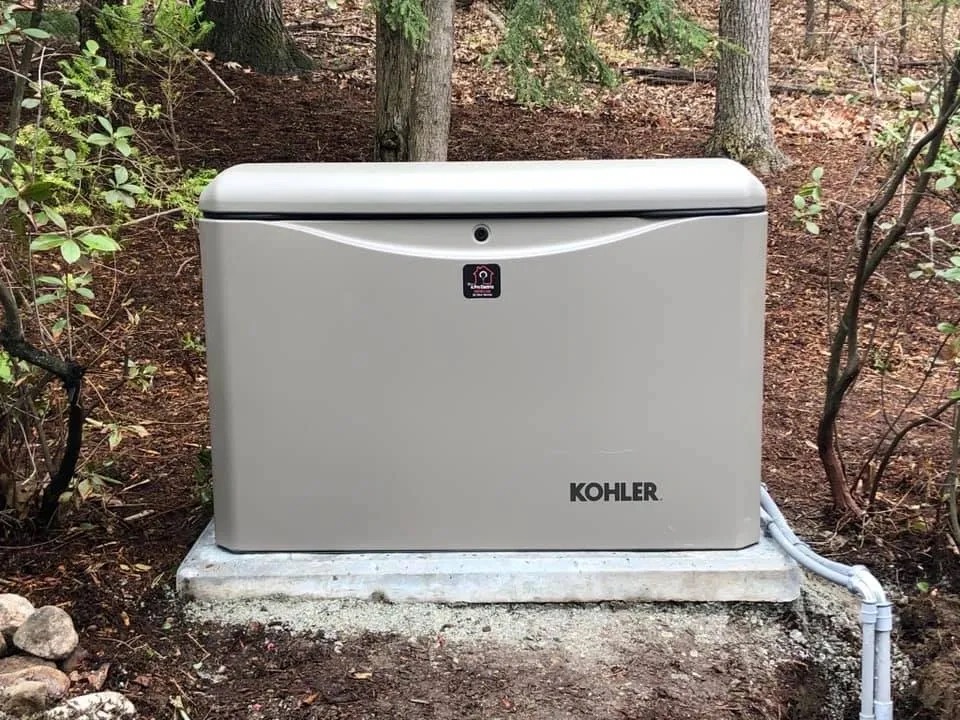
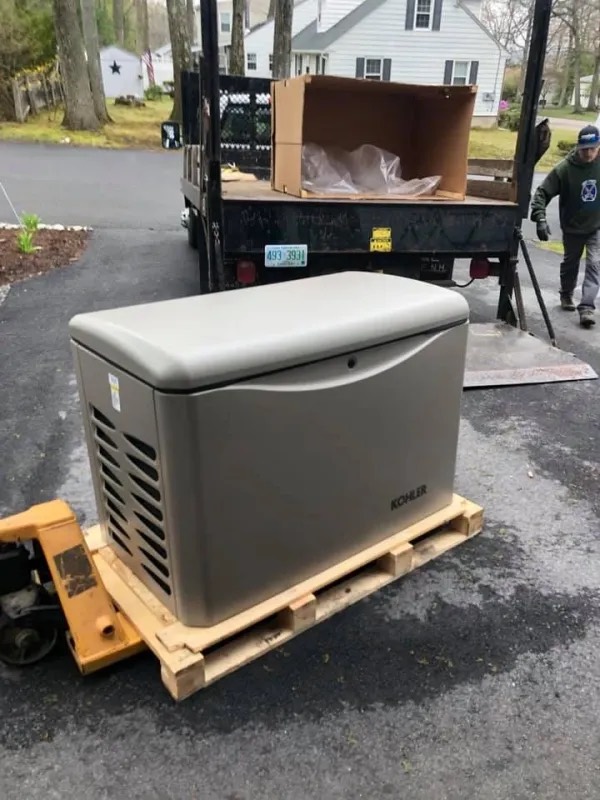
Standby Generator
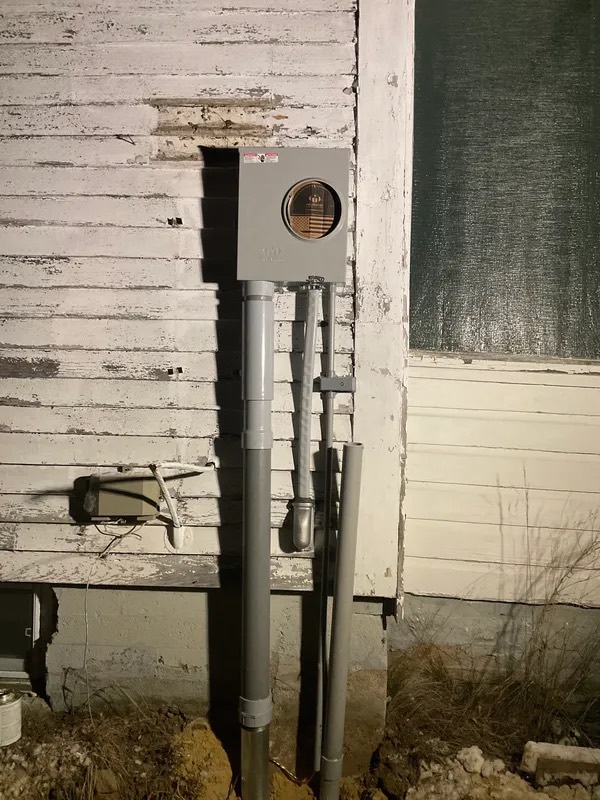
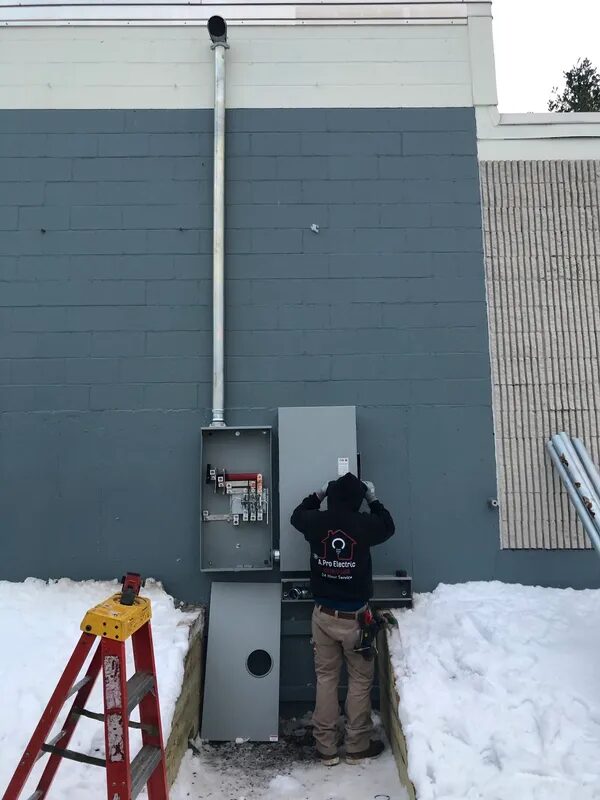
Service and Meter Work
New Hampshire and Massachusetts
Where We Work in New Hampshire and Northern Massachusetts
Everyday work is central New Hampshire. For larger jobs we travel, and Austin is licensed in Massachusetts as well.
- Manchester, NH
- Concord, NH
- Nashua, NH
- Henniker, NH
- Derry, NH
- Salem, NH
- Bedford, NH
- Laconia, NH
- Keene, NH
- Meredith, NH
- Methuen, MA
- Wolfeboro, NH
- Haverhill, MA
- Lowell, MA
- Lebanon, NH
- Portsmouth, NH
New Hampshire Electrician Questions, Answered
Are you a licensed and insured electrician in New Hampshire?
Yes. Austin Provencher holds New Hampshire master electrician license number 14569M, which is the top of the three license tiers in this state and the only one a job can be permitted under. The number is checkable against the state license lookup before anybody comes to the house. There is a $2 million umbrella policy behind the work and a certificate goes to whoever needs one before we start.
Do you pull the permit and handle the inspection?
Yes, both, as part of the job rather than left with you. Electrical work in New Hampshire beyond a like-for-like swap is permitted and inspected by the town the property sits in, and the permit carries the master electrician's license. Unpermitted work is the sort of thing that surfaces years later during a house sale or an insurance claim, which is why it is not worth skipping to save a few days.
How much does a 200 amp service upgrade cost in New Hampshire?
Typically $3,000 to $3,500. What moves it is the run from the meter, whether the mast and meter socket are being replaced, and what the utility needs on their side. It is worth establishing whether you need the upgrade at all first, because sometimes the service is adequate and the real problem is a panel with no spare ways. Quotes are free and follow a look at the actual job.
Do you take emergency electrical calls?
Yes, around the clock. Burning smells near a panel, a hot or scorched breaker, water in electrical equipment, a main breaker that trips again immediately when reset, or storm damage to a service mast are all calls to make straight away rather than in the morning. How fast somebody reaches you depends on where you are, and we say so on the phone rather than after you have waited.
What areas of New Hampshire do you cover?
Henniker is home, with Hillsborough, Weare, Deering, Antrim, Bradford and Warner next door. The everyday work runs through Concord and Hopkinton, Manchester, Bedford, Nashua, Derry and Salem, then Laconia and Meredith in the Lakes Region and Keene toward Monadnock. Commercial work reaches further, to Portsmouth, Dover, Lebanon and over the border into Massachusetts.
Are you licensed in Massachusetts as well as New Hampshire?
Yes, and they are two separate licenses rather than one that travels. An electrical license does not cross a state line, so a contractor holding only the New Hampshire license cannot legally pull a permit in Lowell or Lawrence, and the reverse is equally true. For a business with sites either side of the border that is the difference between one contractor and two.
Do you do both residential and commercial electrical work?
Yes, and they are run as two sides of the business rather than one with the other bolted on. Residential covers panel and service upgrades, rewiring, lighting, EV chargers, generators and emergency repairs. Commercial covers tenant fit-ups, three-phase service and switchgear, lighting retrofits, equipment connections, low voltage and scheduled maintenance, with restaurants and food service a particular strength.
Can you take over a job another electrician started?
Usually, and it is more common than people expect. We look at what is already installed and tell you plainly what has to be redone and what can stay, rather than quoting to rip it all out by default. Where the original work was never permitted, that gets sorted out as part of putting it right, because an unpermitted job stays a problem until somebody inspects it.