

New Construction and GC Electrical Work in NH and Massachusetts
Electrical for ground-up commercial construction, additions and major renovation, working directly for owners or as a subcontractor to the general contractor, across Manchester, Nashua, Concord, Portsmouth, Dover and the Merrimack Valley.
New Construction and General Contractor Electrical Work
What New Construction Electrical Work Covers
Everything from the temporary power on day one to the final inspection: the service and distribution, the rough-in, the fixtures and devices, the equipment connections and the commissioning, on a program set by somebody else.
The electrical is rarely the critical path on a commercial build, but it appears on it at several specific points, and those points are what the coordination is about: the utility date, the gear delivery, the rough-in window before the building closes, and the inspection sequence ahead of occupancy.
We take this work across southern New Hampshire and northern Massachusetts: commercial and light industrial in Manchester, Bedford, Hooksett and Goffstown, the Nashua and Merrimack corridor, Concord and the surrounding towns, Henniker, Weare, Hillsborough and Hopkinton as home territory, the Seacoast at Portsmouth, Newington, Dover and Rochester, and over the state line in Lowell, Lawrence, Haverhill, Methuen and Andover.
New Hampshire master license 14569M goes on the permit here, with a separate Massachusetts license for work over the border. A general contractor working both sides of the line gets one electrical sub rather than two, and the service area page sets out the full geography.
Working as a Subcontractor to a General Contractor
On most commercial builds the general contractor runs the program and the electrical fits into it, which makes reliability worth more than anything else on the quote.
What a GC actually needs is a sub who turns up when the schedule says, who flags an electrical dependency before it becomes their problem, who does not hold up the trade behind them, and who handles their own permits and inspections without being managed.
The dependencies worth flagging early are consistent: how long the utility will take, when the gear will actually arrive, what has to be in before the slab is poured or the walls close, and which inspections have to happen in what order. A GC who knows those dates can plan around them; one who finds out late cannot.
We also work directly for owners on smaller commercial projects where there is no general contractor, which changes the coordination but not the work.
The Service, the Utility and the Long-Lead Items
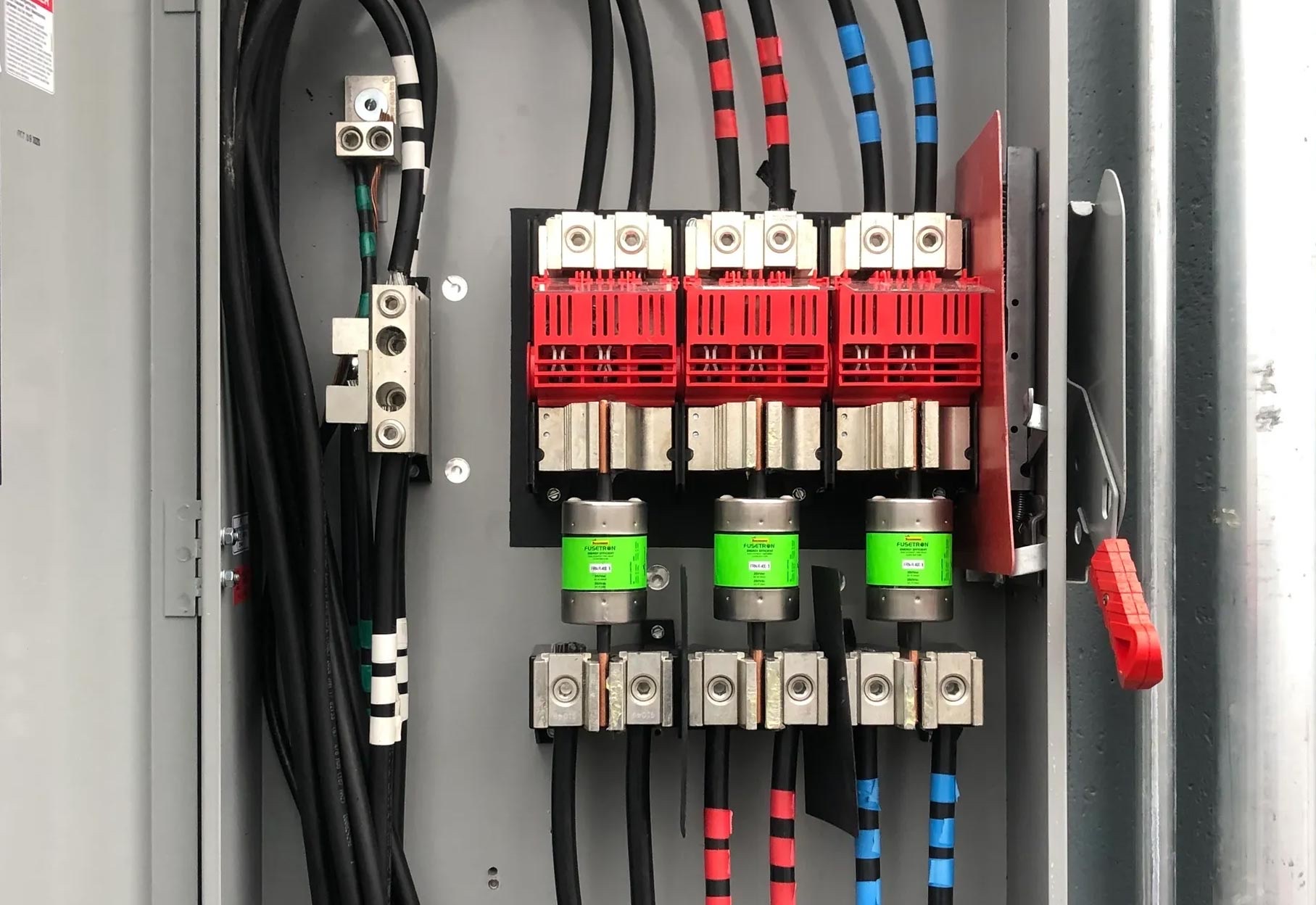
On a new commercial building the utility connection and the switchgear are the two items most likely to set the date, and both need to be started long before they look urgent.
A new service means a utility application, their engineering, possibly a transformer and work in the street, and a schedule that is theirs rather than the project's. On a site with no existing supply, or one needing three phase where none is available, that process can run for months.
Switchgear, panelboards and transformers are ordered rather than stocked, and commercial gear lead times have been long and unpredictable for several years. A building ready for gear that has not arrived is a stalled project, and it is one of the most common causes of a commercial program slipping.
Both can be started from a known load long before the finishes are decided, which is the argument for settling the electrical design early. Service and switchgear work covers what is involved.
Temporary Power and the Early Site
Construction power is the first electrical item on site and it is worth doing properly rather than treating as a temporary inconvenience.
A temporary service sized for what the trades will actually run, with GFCI protection throughout, distribution positioned where the work is rather than where it was convenient on week one, and enough capacity that nobody is running the site from extension leads.
On a New Hampshire winter build the temporary supply is also carrying heat: ground thaw, concrete cure, temporary heaters for drywall and finishes. That load is substantial and it is routinely underestimated, which produces a site tripping supply all winter.
The transition from temporary to permanent power needs planning too, because there is usually a period where the building is partly energized and still under construction, and the site safety arrangements have to account for that.
Rough-In, Sequencing and the Window That Closes
Rough-in is where the electrical schedule is genuinely constrained, because it happens in a window that opens and closes on somebody else's program.
Underground and in-slab work has to be in before the pour, and once concrete is down it is down. In-wall rough-in happens after framing and before insulation and drywall, sharing that window with plumbing and mechanical, all three competing for the same ceiling and wall cavities. Miss it and the work costs several times as much.
Coordination between the trades in the ceiling is the recurring conflict on commercial builds. Ductwork is large and inflexible, plumbing has a slope requirement, and electrical is the most flexible of the three, which in practice means the electrical works around them and needs to know their routes early.
What causes rework is design that is still moving during rough-in: equipment not selected, layouts changing, tenant requirements arriving late. Some of that is unavoidable, and the way to handle it is running capacity and route to a location and leaving the final detail until the information exists.
Permits, Inspections and the Certificate of Occupancy
Commercial construction is inspected at defined stages, and the sequence matters because each one gates work that follows it.
Underground before the pour, rough before it is covered, and final before occupancy. A stage covered before it is inspected has to be opened again, which is a cost nobody budgets for. The permit carries the master electrician's license, and we schedule the inspections rather than leaving them to the GC.
Requirements differ between New Hampshire and Massachusetts and between municipalities, in practice as well as on paper. A build in Nashua does not run identically to the same build in Lawrence, and knowing which applies where is part of what a licensed contractor in both states brings.
The certificate of occupancy waits on every trade's final inspection plus fire and, in food service, health. Electrical is rarely the last one outstanding, but when it is, it is usually because of something identified weeks earlier and not closed out.
Fit-Out, Equipment and the Final Connections
The last phase is where a building goes from complete to usable, and it depends on information that arrives late by nature.
Fixtures, devices, trim, the lighting and its controls, then the equipment connections once the equipment is delivered and set. On a commercial build that equipment is frequently the tenant's or the owner's rather than the contract's, and it turns up on its own schedule.
This is why the equipment schedule matters so much earlier in the program: the circuits have to be in the wall before the equipment is on site, sized from nameplates that may not exist yet. Running capacity and route to the position and leaving the connection is the standard approach. Equipment and machine connections covers the detail.
Where the building is being fitted out for a specific tenant rather than handed over as a shell, the work runs as a tenant fit-up within the larger build, which usually means two overlapping scopes and one set of inspections.
Handover, Records and the Building Afterward
What gets handed over at the end determines how manageable the building is for the next twenty years, and it is the part of a construction program most often rushed.
Accurate panel schedules, circuits identified at both ends, as-built information where the installation differs from the drawings, and the documentation for the equipment installed. A new building handed over with a generic panel schedule starts accumulating confusion immediately.
Commissioning is the other half: lighting controls set up properly rather than left at factory defaults, emergency lighting tested and recorded, generator load tested rather than just started, and equipment run under load. Controls left uncommissioned is the most common reason a new building does not deliver the savings its design promised.
Buildings we build are frequently buildings we then maintain, and a scheduled maintenance arrangement from handover means the record starts at day one rather than being reconstructed later. Low voltage and structured cabling handed over documented works the same way.
What New Construction Electrical Work Covers
- Temporary construction power, sized for the trades and the winter heat load
- Utility application and coordination from the start of the program
- Service, switchgear and distribution, ordered against long lead times
- Underground and in-slab work ahead of the pour
- Rough-in coordinated with mechanical and plumbing
- Lighting, controls, devices, fixtures and emergency lighting
- Equipment connections as items are delivered and set
- Permits and inspection scheduling under a master license, in either state
- Commissioning of controls, emergency systems and standby power
- Panel schedules, as-builts and documented handover
When to Bring in the Electrical Contractor on a Build
- A commercial build is being designed and the load is not yet established
- A site has no existing supply, or may not have three phase
- A general contractor needs an electrical sub licensed in this state
- Switchgear has not been ordered and the program assumes it is available
- A slab pour is approaching and underground work is not confirmed
- Tenant equipment is unknown but rough-in is due
- A project spans both New Hampshire and Massachusetts
- An addition or major renovation is being planned on an existing building
New Construction & GC Work Questions, Answered
Do You Work as a Subcontractor for General Contractors?
Yes, and on most commercial builds that is the arrangement. We work to the GC program, handle our own permits and inspections, and flag the electrical dependencies, particularly the utility date and gear lead times, early enough that they can be planned around.
When Should the Electrical Contractor Be Involved in a New Build?
At design, not at construction. The utility application and the switchgear order are the two longest lead items on most commercial projects and both can be started from a known load well before the finishes are decided. Involving the electrical late is what makes those items critical.
How Long Does a New Commercial Service Take?
The utility side is the variable and it is measured in weeks or months rather than days, particularly where three phase has to be brought in or a transformer is required. The physical installation is short by comparison. Starting early is the only thing that shortens the total.
What Happens If the Tenant Equipment Is Not Selected Yet?
We run capacity and route to the position and leave the final connection until the nameplate exists. That is a planned gap. What causes rework is rough-in based on assumed equipment that then changes, which is expensive once the walls are closed.
Can You Handle a Project That Spans Both States?
Yes. New Hampshire master license 14569M and a separate Massachusetts license mean one electrical contractor across both, rather than a different sub and a different standard on each side of the border.
Who Schedules the Inspections?
We do, for the electrical scope, under our permit. The stages are underground before the pour, rough before it is covered and final before occupancy, and each one gates the work that follows, so they are booked into the program rather than called when the work happens to be ready.
What Do We Get at Handover?
Accurate panel schedules, circuits identified at both ends, as-built information where the installation differs from the drawings, and commissioning records for controls, emergency lighting and any standby system. A building handed over with a generic schedule starts accumulating confusion on day one.
Guides on New Construction & GC Work
Other Commercial Electrical Work
Tenant Fit-Ups & Build-Outs
Restaurants, retail, offices and warehouses, rough-in to trim.
Service, Distribution & Switchgear
Three-phase service, panelboards, transformers and feeders.
Commercial Wiring & Circuits
New build wiring, retrofits, added circuits, conduit and raceway.
Commercial Lighting
LED retrofits, parking lot and site lighting, controls, high-bay.
Low Voltage & Systems
Data cabling, intercom, surveillance and access control.
Maintenance & Service Contracts
Scheduled maintenance, thermal scanning, planned replacement.
24 Hour Commercial Emergency
Downtime response, storm and outage work, temporary power.
Property Management & Multi-Family
Common areas, apartment buildings, turnovers, house panels.
Equipment & Machine Connections
Kitchen equipment, motors, rooftop units and process circuits.
Commercial Generators & Emergency Power
Standby systems, automatic transfer switches, life safety power.
Commercial EV & Fleet Charging
Workplace charging, fleet charging, multi-port installations.