

Buying an Older New Hampshire House: What to Check Electrically
Six things to establish about a New Hampshire house before the contingency period closes, and what each one costs to put right.
Published
What to Check Electrically Before You Buy an Older New Hampshire House
What Should You Check Electrically When Buying an Older New Hampshire House?
Buying an older house electrical problems tend to surface in the same handful of places, and in New Hampshire housing stock they are predictable enough that knowing where to look turns a vague worry into a short list you can actually price. The electrical system is one of the few things in a house where the cost of putting it right varies by a factor of twenty depending on what is found.
Start at the panel, because it answers several questions at once. What brand is it, how big is the service, are there spare spaces, and does anything look or smell wrong. Then the outlets, where two-prong outlets indicate an ungrounded system, and the absence of GFCI protection in kitchens, bathrooms, garages, basements and outdoors is both a safety gap and a code gap.
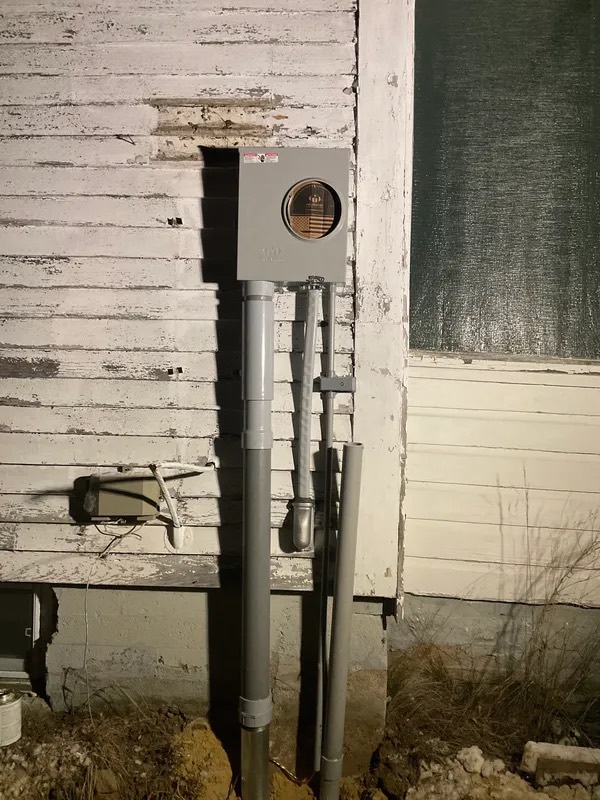
Then the parts nobody looks at. The basement and the attic show the actual wiring, which is where knob and tube on ceramic knobs, cloth-covered cable, aluminum branch wiring, junctions made outside boxes and circuits vanishing into insulation all become visible. The service entrance outside shows the mast, the meter socket and the drop, all of which are expensive if they need replacing and invisible if you do not look up.
A home inspector will flag the obvious. What a general inspection will not do is tell you what the remedy costs, and that difference is where the negotiation actually happens. A targeted pre-purchase electrical inspection is what turns a list of observations into a priced scope.
It applies across New Hampshire housing stock, whether that is a pre-war house in Manchester or Concord, a post-war ranch in Nashua, Derry or Salem, or a farmhouse out towards Henniker, Weare and Hillsborough.
What Electrical Problems Are Common in New Hampshire Houses?
It varies by era and by region, and New Hampshire has a wider spread of housing stock than most states its size.
Pre-1950 stock, which includes the farmhouses around Henniker, Hopkinton, Warner, Bradford and Deering, the older wards of Manchester and Concord, and the Victorian stock in Keene, is where knob and tube, cloth-covered cable and fuse boxes live. Ungrounded circuits are the norm rather than the exception, and partial rewiring from the 1970s is extremely common, which means modern wiring in the obvious places and original wiring still live behind the plaster.
Post-war and 1960s to 1980s stock, which is much of Nashua, Derry, Salem, Hudson and the commuter belt, tends to have 100 amp service, Federal Pacific or Zinsco panels in a meaningful proportion, and aluminum branch wiring in houses built roughly between 1965 and 1973. That last one is specific and worth checking for by date.
Rural properties anywhere from Weare and New Boston out to the Monadnock towns bring their own list: well pumps and septic pumps on circuits that may or may not be dedicated, long feeders to barns and outbuildings, and generator arrangements of varying legitimacy. Lakes Region properties around Meredith, Wolfeboro, Alton and Moultonborough add seasonal issues, since a camp that sits idle for months has different problems from a house lived in year round, and a property left unheated through a New Hampshire winter is exactly where backup power stops being a luxury.
Does a Home Inspection Cover the Electrical System Properly?
It covers it visually, and that is genuinely useful, but it is not the same as an electrical inspection and the difference matters when money is attached.
A general home inspector will open the panel cover, note the brand and the service size, test a sample of outlets, check for GFCI where it is required, and report what is visible. They will flag Federal Pacific and Zinsco panels, obvious knob and tube, double-tapped breakers and missing GFCI. That is a real service and it catches most of the significant items.
What it does not do is quantify. An inspection report saying "knob and tube wiring observed in attic" does not tell you whether that is two circuits or the whole house, and the difference between those is tens of thousands of dollars. "Federal Pacific panel present" does not tell you whether the service is also undersized for what you plan to do with the house.
That is why a targeted pre-purchase electrical inspection is worth it on anything older or anything where the general report raised a flag. It establishes scope, and scope is what you negotiate with.
Is Aluminum Wiring a Problem When Buying a House?
It is a specific, datable problem and it is worth checking for by construction year. Aluminum branch circuit wiring was used widely in houses built roughly between 1965 and 1973, when copper prices made it attractive, and a fair amount of New Hampshire's post-war suburban stock falls in that window.
The issue is not the aluminum itself. It is the connections. Aluminum expands and contracts more than copper, oxidizes differently, and creeps under a terminal screw over time. Connections that were tight on the day loosen over decades, and a loose connection under load generates heat. The failure point is almost always at a device, an outlet, a switch or a splice, rather than in the middle of a run.
It is remediable rather than requiring a full rewire, which is the part people often do not realize. The recognized fixes involve treating every connection properly, whether by approved connectors at each device or by pigtailing to copper with listed methods. It is methodical work and there is a lot of it, since it means every device in the house.
What is not acceptable is leaving it alone because nothing has gone wrong yet, or having it "fixed" with ordinary wire nuts, which is common and is worse than useless. Aluminum wiring remediation done properly is a known quantity; done cheaply it creates the exact failure it was meant to prevent.
How Much Should You Budget for Electrical Work in an Older New Hampshire House?
It depends entirely on what is found, and the range is wide enough that guessing is worse than useless. What helps is knowing the shape of the common outcomes.
A panel that needs replacing because it is a Federal Pacific or Zinsco, with the service staying the same size, is one level of work. A 200 amp service upgrade runs $3,000 to $3,500 for a straightforward job, and that covers a lot of houses where the panel and the capacity are both being addressed at once.
A whole-house rewire on a 2,000 square foot house runs $18,000 to $20,000, and that is the number that matters if knob and tube wiring turns out to be extensive. Between those two extremes sit the partial jobs, which might be a handful of circuits, GFCI protection added where it is missing, aluminum wiring remediation, or a service entrance that needs work.
The useful approach at offer stage is to establish which category the house falls into rather than to price every line item. A house needing a panel is a different negotiation from a house needing a rewire, and an inspection during the contingency period is what tells you which one you are buying.
What Electrical Work Should Be Done Before Moving In?
Anything that becomes far more expensive or disruptive once the house is furnished and occupied, which is a shorter list than it sounds and it is worth being disciplined about.
Rewiring comes first by a distance. An empty house with no furniture, no carpets and nobody living in it is the cheapest possible conditions for fishing cable, and the same job six months later with a family in residence costs more and hurts more. If any whole-house rewiring is happening, it happens before the moving truck.
Panel work is second, partly because it means a day without power and partly because everything else assumes the panel is sorted. If a panel replacement or service upgrade is needed, doing it first means every subsequent circuit lands in the right place.
Anything involving opening walls or ceilings should be coordinated with whatever else is being done. If a kitchen is being replaced or a bathroom gutted, that is the moment for the wiring behind them. Safety items come next and do not wait. GFCI protection where it is missing, smoke and carbon monoxide detectors hardwired and interconnected, and anything the inspection flagged as a hazard rather than a deficiency.
Can You Negotiate on Electrical Problems Found in an Inspection?
Routinely, and electrical findings are among the more negotiable items because they are concrete, documented and expensive enough to matter. What makes the difference is specificity.
"The wiring is old" is not a negotiating position. "The panel is a Federal Pacific Stab-Lok, the service is 100 amps, there is knob and tube live in the attic serving the second floor lighting, and here is a written scope from a licensed electrician" is one. The second version is a number the other side can evaluate.
That is the practical case for getting a proper electrical assessment during the contingency period rather than relying on the general inspection alone. It converts a vague concern into a priced scope, and a priced scope is the only thing that moves a price.
It also protects you from the opposite error, which is walking away from a good house over something that turns out to be modest. Plenty of older New Hampshire houses have alarming-sounding findings that resolve into a day of work.
What Is Worth Knowing Before Buying an Older New Hampshire House?
That the electrical system is one of the few parts of a house where the worst case and the best case are genuinely far apart, and that the only way to know which one you are looking at is to have somebody look properly before the contingency period closes.
The specific things worth establishing are short, and they are what brand the panel is, what the service size is, whether there is live knob and tube and how much, whether there is aluminum branch wiring, what condition the service entrance is in, and whether GFCI protection exists where it should. Six answers, one visit, and they turn an unknown into a budget.
None of that means an older house is a bad buy. New Hampshire's older stock is often extremely well built, and a house with original wiring has usually also got framing and materials nobody uses any more. It means the electrical system is a known item to price rather than a surprise to discover.
When buying an older house electrical questions should be settled before the contingency period ends rather than after closing. We carry out pre-purchase electrical inspections across Manchester, Concord, Nashua, Derry, Salem, Bedford, Laconia, Keene and the towns around them, and the report is written so you can negotiate with it.
Last updated
Older House Electrical Questions
What Year Was Aluminum Wiring Used in Houses?
Roughly 1965 to 1973, when copper prices made it attractive for branch circuits. A fair amount of New Hampshire post-war suburban stock falls in that window, so construction year is worth checking specifically. Aluminum for the service entrance and for large appliance feeders is normal and is not the same issue.
Should I Get a Separate Electrical Inspection When Buying?
On anything older, or anything where the general inspection raised a flag, yes. A home inspector reports what is visible; an electrical inspection establishes scope, and scope is what you negotiate with. The difference between two knob and tube circuits and a whole house is tens of thousands of dollars.
Are Two-Prong Outlets a Problem?
They indicate an ungrounded system, which is a genuine limitation rather than an emergency. Without a grounding conductor there is no fault path for anything with a metal case. There are recognized ways to address it, including GFCI protection, but it is worth knowing it is there before you buy.
How Do I Find Out If a House Has Had Electrical Permits Pulled?
The town building or code office holds the records, and a request is usually straightforward. Unpermitted electrical work is one of the more common causes of a delayed closing, so establishing what was permitted and what was not is worth doing early rather than at the last minute.
Is a Fuse Box a Reason Not to Buy a House?
No. A fuse box that is sound, dry, correctly fused and not overloaded is not a hazard. What comes with one is usually the bigger issue, meaning ungrounded circuits, no GFCI protection, and not enough circuits for how a house is used now. Price the whole picture rather than the box.
Can Electrical Problems Delay a Closing?
Yes, in two ways. An insurer refusing cover over knob and tube or a Federal Pacific panel becomes a financing problem when the lender requires insurance. And unpermitted work discovered late has to be resolved before anyone will sign. Both are avoidable by looking during the contingency period.
What Is the Most Expensive Electrical Problem in an Older House?
A full rewire, at $18,000 to $20,000 for a 2,000 square foot house, and it is the finding most worth establishing the scope of early. A panel replacement or a service upgrade is a far smaller number, and most older houses need the second rather than the first.
The Work Behind This Guide
More Guides for Homeowners
How to Tell If Your Electrical Panel Needs Replacing
The signs worth acting on, the panel brands insurers flag, and how to tell a full panel from an unsafe one.
Knob and Tube Wiring in New Hampshire
How to recognize it, why insurers ask about it, and what removing it actually involves.
What Size Electrical Service Does a House Need?
100, 150 or 200 amps, what pushes a house from one to the next, and how to work out where yours sits.